30 English Adjectives to Describe a Person (With Examples)
Learn 30 useful English adjectives to describe a person: personality, feelings and appearance, with simple meanings, example sentences and a quick tip.
28 October 2026 · 5 min read
Think of your best friend. How would you describe them in English? Maybe you say “nice” or “good”… and then you get stuck! Don’t worry. This happens to almost every learner.
In this post you will learn 30 English adjectives to describe a person. An adjective is a word that tells us more about a noun, like kind in “a kind teacher”. We have put the words into easy groups, with a short meaning and an example sentence for each one. Choose five words you like and start using them this week.
Adjectives to describe a person’s personality
Personality is what a person is like inside: how they think, feel and act.
Warm and friendly people
- Kind: nice to other people and happy to help.
- Friendly: easy to talk to; makes you feel welcome.
- Generous: happy to give time, money or help to others.
- Caring: thinks about other people’s feelings.
- Cheerful: often happy and smiling.
- Easy-going: relaxed; doesn’t get angry or worried easily.
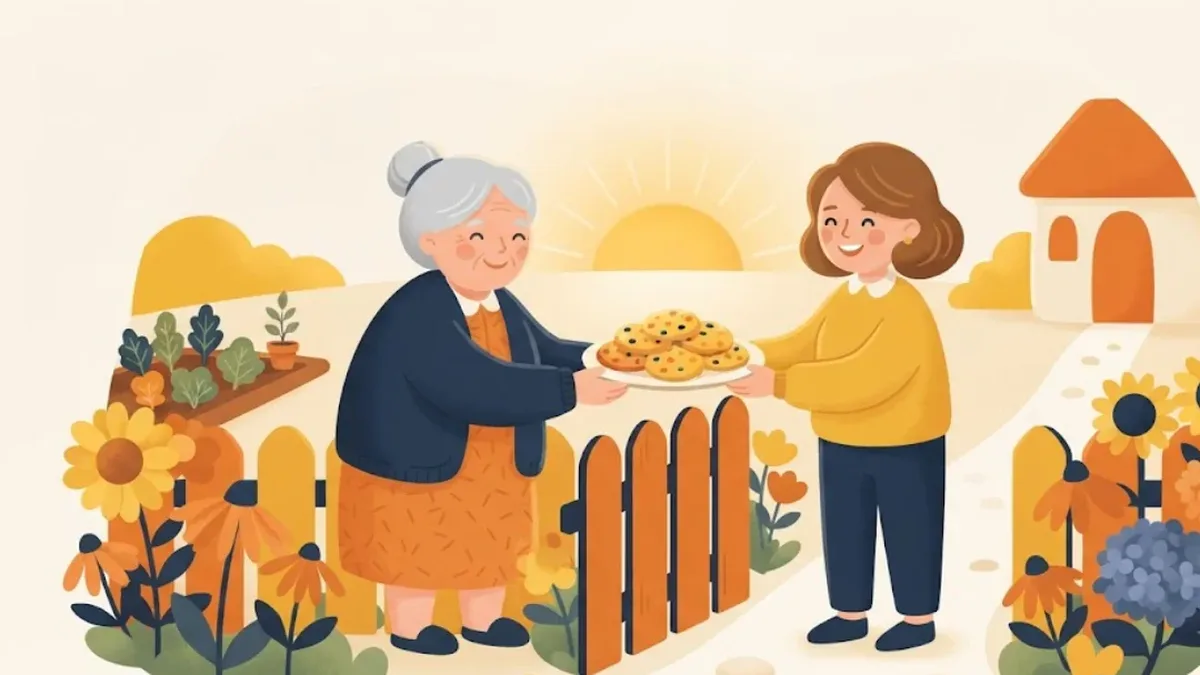
My grandmother is so generous. She always cooks too much food and gives it to the neighbours!
Strong and hard-working people
- Brave: not afraid to do something difficult or scary.
- Determined: keeps trying and doesn’t give up.
- Hard-working: works a lot and does a good job.
- Patient: can wait calmly without getting angry.
- Reliable: you can trust them to do what they say.
- Confident: believes in themselves.
A great example of a determined and brave person is Terry Fox. After losing a leg to cancer, he ran almost a marathon a day across Canada for 143 days, about 5,373 kilometres, to raise money for cancer research. You can hear his story in our lesson Terry Fox: The Marathon of Hope.
She is very determined. She practises English for 20 minutes every single day.
Clever and creative people
- Clever: quick to learn and understand things.
- Curious: wants to know and learn new things.
- Creative: has new and interesting ideas.
- Funny: makes people laugh.
- Thoughtful: thinks carefully, and often thinks about others too.
- Wise: knows a lot about life and gives good advice.
Jane Goodall was famously patient and curious. Starting in 1960, she spent many years quietly watching chimpanzees in Tanzania, and she learned things nobody knew before. Her story is in our lesson about Jane Goodall and the chimpanzees.

Not-so-nice personality words
It’s useful to know these too, but use them gently!
- Lazy: doesn’t like to work or make an effort.
- Rude: not polite.
- Bossy: always tells other people what to do.
- Shy: feels nervous with new people. (This one isn’t bad at all, it’s just a feeling!)
Tip: to sound polite, English speakers often say “a bit” or “not very”. “He’s a bit bossy” or “She’s not very patient” sounds softer than “He’s bossy.”
Adjectives to describe how someone looks
Appearance is what a person looks like on the outside.
- Tall / short: for height.
- Slim: thin in a nice, healthy way. (Slim sounds kinder than thin or skinny.)
- Curly, straight or wavy: for hair.
- Elegant: looks stylish and graceful.
- Smart: wearing neat, nice clothes. (Smart can also mean clever, especially in American English.)
- Good-looking: attractive. It works for men and women.
My brother is tall and slim, with curly black hair.
Be careful: talking about someone’s body or weight can be rude in English. It’s usually kinder to describe hair, clothes or a smile.
Adjectives for a person’s mood
These words describe how someone feels right now, not always.
- Excited: very happy about something that will happen.
- Nervous: a little worried or afraid.
I was so nervous before my English exam, but my teacher was calm and encouraging.
Want more feeling words? Try our post on 12 happy English idioms, like over the moon and on cloud nine.
How to use adjectives to describe a person
Here are three easy patterns you can use today:
- be + adjective: “My teacher is patient.”
- adjective + noun: “She’s a kind person.”
- very / really / a bit + adjective: “He’s really funny.”
You can also use more than one adjective. Put personality words together with and:
My best friend is funny, kind and very reliable.
And remember the golden rule: show, don’t just tell. Add an example!
My dad is patient. He taught me to ride a bike, and he never got angry when I fell.
This makes your English more interesting, and it’s perfect for speaking exams too.
Quick practice
Try these three small tasks:
- Write three adjectives that describe you.
- Describe a famous person you admire in two sentences.
- Say one kind sentence about a friend, out loud, in English.
Saying words out loud helps you remember them. If you need ideas, our guide on how to study has simple daily habits.
Learn more words with true stories
The best way to remember English adjectives to describe a person is to meet real people who show them: brave explorers, patient scientists, kind and generous heroes. Every lesson on Bright Lives English tells a short, true, inspiring story in clear English, with new words, a transcript and a quiz.
Watch our free video lessons and see how many of today’s 30 adjectives you can find. Which one describes you best?