15 Everyday Phrasal Verbs You Will Hear Every Day
Learn 15 everyday phrasal verbs like 'wake up', 'look for' and 'give up', with simple meanings, example sentences and a quick quiz for English learners.
19 October 2026 · 5 min read
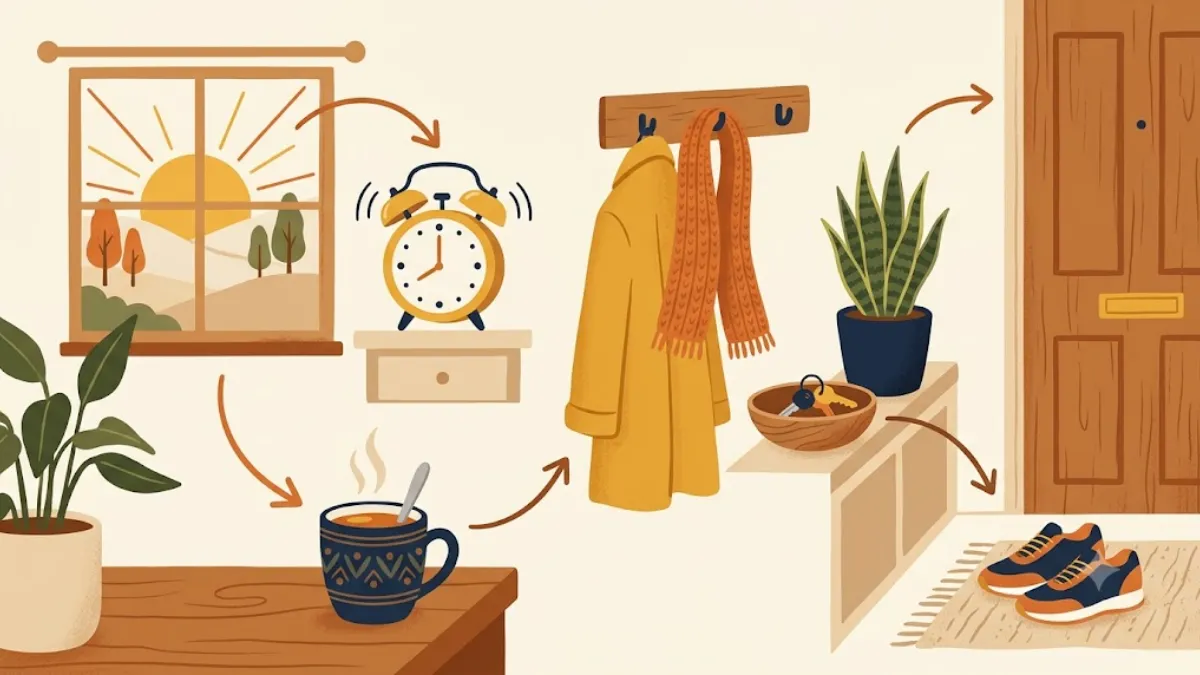
Have you ever understood every word in a sentence, but not the sentence itself? Often the reason is a phrasal verb. These everyday phrasal verbs are everywhere: at home, in shops, in films and in songs. Native speakers use them all the time, often without thinking.
A phrasal verb is a verb plus a small word like up, on, off or out. Together, they make a new meaning. For example, give means one thing, but give up means “stop trying”. The good news? You only need a few common ones to understand a lot more English.
Today we follow one ordinary day, from morning to night. You will learn 15 phrasal verbs, each with a simple meaning and an example.
Everyday phrasal verbs for the morning
1. Wake up
Meaning: stop sleeping.
“I usually wake up at seven, but today I woke up at six!”
2. Get up
Meaning: get out of bed. (You can wake up but stay in bed. You get up when you stand up and start your day.)
“I woke up early, but I didn’t get up until eight.”
3. Put on
Meaning: start wearing clothes, shoes or glasses.
“It’s cold outside. Put on your coat.”
4. Turn on / turn off
Meaning: make a machine or light start or stop working.
“Can you turn on the kettle? And please turn off the lights when you leave.”
5. Hurry up
Meaning: do something more quickly.
“Hurry up! The bus leaves in five minutes.”

Phrasal verbs for the day
6. Look for
Meaning: try to find something.
“I’m looking for my keys. Have you seen them?”
7. Find out
Meaning: learn a piece of information.
“I want to find out what time the museum opens.”
8. Pick up
Meaning: lift something up, or collect someone or something.
“Can you pick up some bread on your way home?”
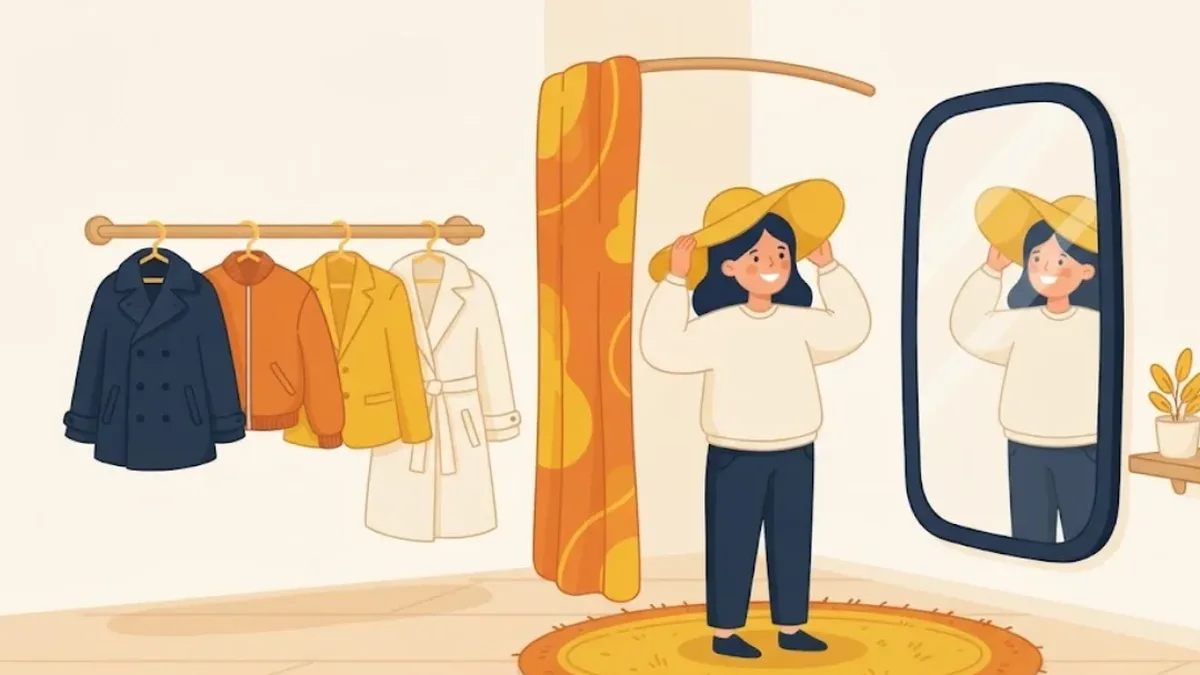
9. Try on
Meaning: put on clothes in a shop to see if they fit.
“These shoes look nice. Can I try them on?”
10. Run into
Meaning: meet someone by chance, without planning it.
“I ran into my old teacher at the supermarket today!”
Phrasal verbs for the evening
11. Look after
Meaning: take care of someone or something.
“My sister looks after her neighbour’s cat when he travels.”
12. Go out
Meaning: leave your home to do something fun, like eat or see friends.
“We’re going out for dinner tonight. Do you want to come?”
13. Throw away
Meaning: put something in the bin because you don’t want it.
“This milk is old. Let’s throw it away.”
14. Calm down
Meaning: become less angry, worried or excited.
“Calm down. It’s only a small mistake. We can fix it.”
15. Give up
Meaning: stop trying to do something, often because it is hard.
“Learning English can be hard, but please don’t give up!”
Give up is a great word for real stories. Terry Fox lost his leg to cancer when he was 18. Three years later, he started running across Canada to raise money for cancer research. He ran about 42 kilometres, the length of a marathon, almost every day for 143 days. He never gave up. You can learn his story in our lesson Terry Fox: The Run That Never Ended.

Three small tips for phrasal verbs
1. Learn them in a sentence, not alone. “Put on” is easy to forget. “Put on your coat” is much easier to remember, because you can see a picture in your head.
2. Watch where the object goes. With many phrasal verbs you can say “try on the shoes” or “try the shoes on”. But with a short word like it or them, it goes in the middle: “try them on”, not “try on them”.
3. Use them about your own life. Tonight, tell yourself the story of your day: “I woke up at seven, I put on my jacket, I ran into a friend…” Saying it out loud helps the words stay in your memory. If you want more ideas, read our guide on how to study with Bright Lives English.
Quick quiz
Choose the right phrasal verb: wake up, look for, give up, put on, find out.
- I can’t see my phone. Can you help me ___ it?
- It’s raining. ___ your raincoat!
- I always ___ when my alarm rings.
- Let’s ___ how much the tickets cost.
- Don’t ___. You are getting better every day!
Answers: 1. look for · 2. Put on · 3. wake up · 4. find out · 5. give up
Keep going!
Now you know 15 everyday phrasal verbs, and you will start to hear them everywhere. Want to learn even more? Try our 25 phrasal verbs for work next.
The best way to remember new words is to hear them in real stories. Watch our free video lessons: true, inspiring stories told in clear English for levels A1 to B2. Start learning with Bright Lives English today, and don’t give up!