10 Surprising Fun Facts About Famous Scientists
Did Alan Turing run marathons? Are Marie Curie's notebooks still radioactive? Enjoy 10 fun facts about famous scientists, in easy English with new words.
14 October 2026 · 5 min read
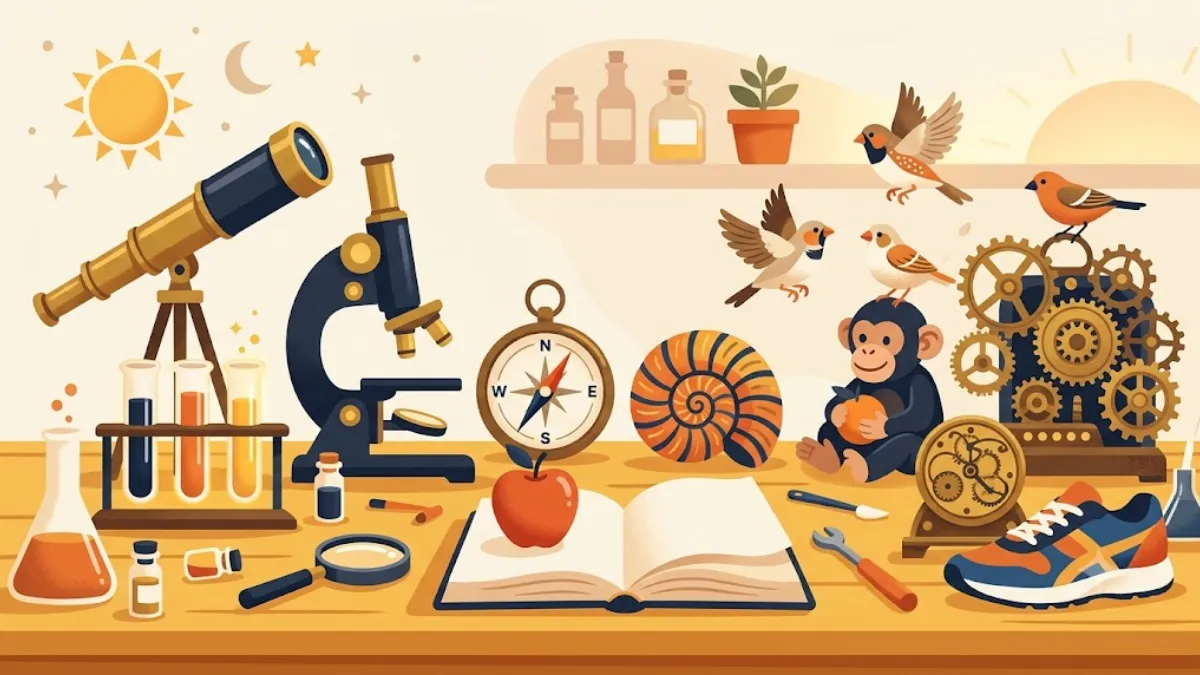
We often think of great scientists as serious people in white coats. But their lives were full of surprises! Some were runners, some were seasick, and one even had a party for time travellers. Here are 10 fun facts about famous scientists, written in simple English. Every fact is true, and each one teaches you a few useful new words.
10 fun facts about famous scientists
1. Marie Curie’s notebooks are still radioactive
Marie Curie worked with radium, a material that gives off radiation (invisible energy that can be dangerous). More than 100 years later, her notebooks still give off radiation. Today they are kept in lead-lined boxes (boxes with a metal inside that stops radiation) in a library in Paris. Visitors must sign a form and wear protective clothing to read them.
“Her notebooks are still radioactive today.”
Marie Curie was also the first woman to win a Nobel Prize, and she won it twice, in two different sciences. You can hear her full story in our free lesson Marie Curie: The Secret School and Two Nobel Prizes.
2. Stephen Hawking had a party for time travellers
In 2009, Stephen Hawking had a party at the University of Cambridge, with balloons and glasses of champagne. But he sent the invitations after the party. Only a real time traveller could come! Nobody did. It was a fun experiment (a test to find out if something is true).
3. Hawking was born 300 years after Galileo died
Here is another Hawking fact. He was born on 8 January 1942. The great Italian scientist Galileo died on 8 January 1642, exactly 300 years before. Hawking liked to tell people about this coincidence (when two things happen in a surprising way, by chance). Doctors once said he had two years to live, but he lived for 55 more. Watch his story in Stephen Hawking: Doctors Gave Him Two Years… He Lived 55 More.

4. Alan Turing was a very fast runner
Alan Turing helped to break secret codes in the Second World War, and his ideas helped to create the modern computer. He also loved running. In 1947 he ran a marathon in 2 hours and 46 minutes and finished fifth in a national race in Britain. That is very fast for a runner who was not a professional!
“He loved running, and he was very fast.”
5. Charles Darwin was seasick for most of his famous voyage
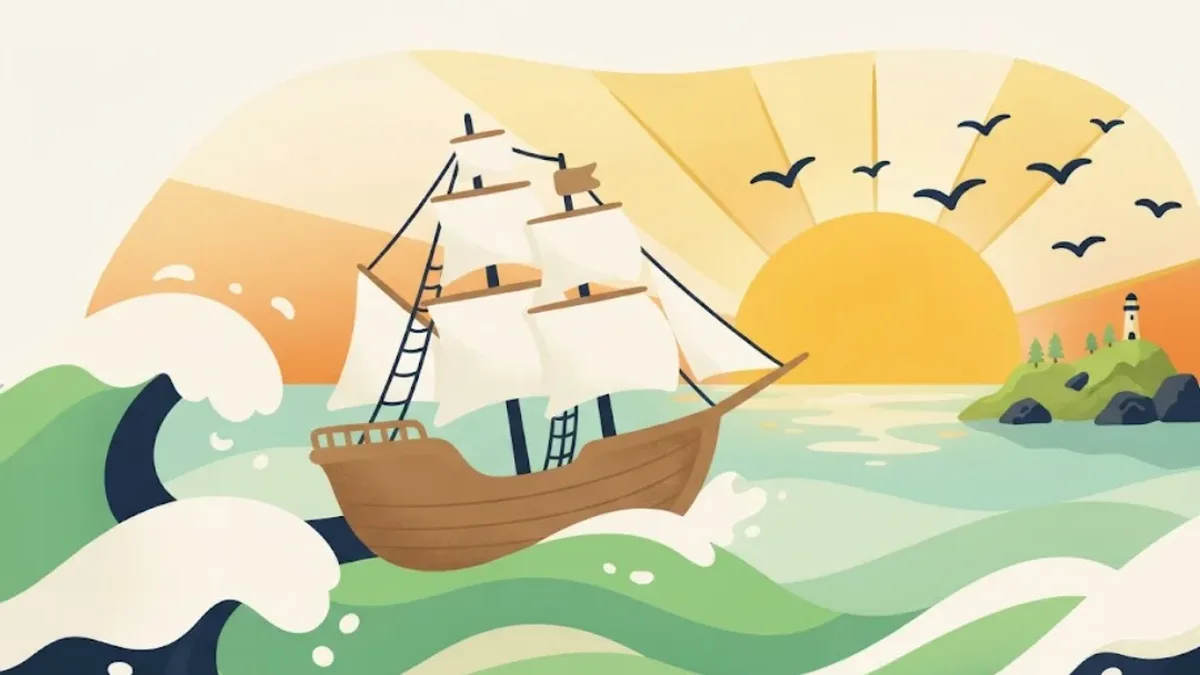
Charles Darwin sailed around the world on a ship called HMS Beagle for almost five years, from 1831 to 1836. The trip changed science forever. But Darwin felt seasick (ill because the boat moves) for much of the time. Happily, he spent many months exploring on land, collecting plants, animals and fossils.
6. Ada Lovelace’s father was a famous poet
Ada Lovelace was the daughter of the poet Lord Byron. Her mother wanted her to study maths, not poetry. In 1843, Ada wrote notes about a calculating machine that was never built. Her notes included a method for the machine to solve a maths problem. Many people call it the first computer program, written about 100 years before modern computers.
7. Jane Goodall’s favourite toy was a chimpanzee
When Jane Goodall was about one year old, her father gave her a toy chimpanzee called Jubilee. Some adults thought it would give her bad dreams, but she loved it. She kept Jubilee all her life. Years later, Jane became the world’s most famous chimpanzee expert. She studied wild chimpanzees in Tanzania for decades and died in 2025, aged 91.
“As a child, she was given a toy chimpanzee.”
8. Albert Einstein’s journey began with a compass
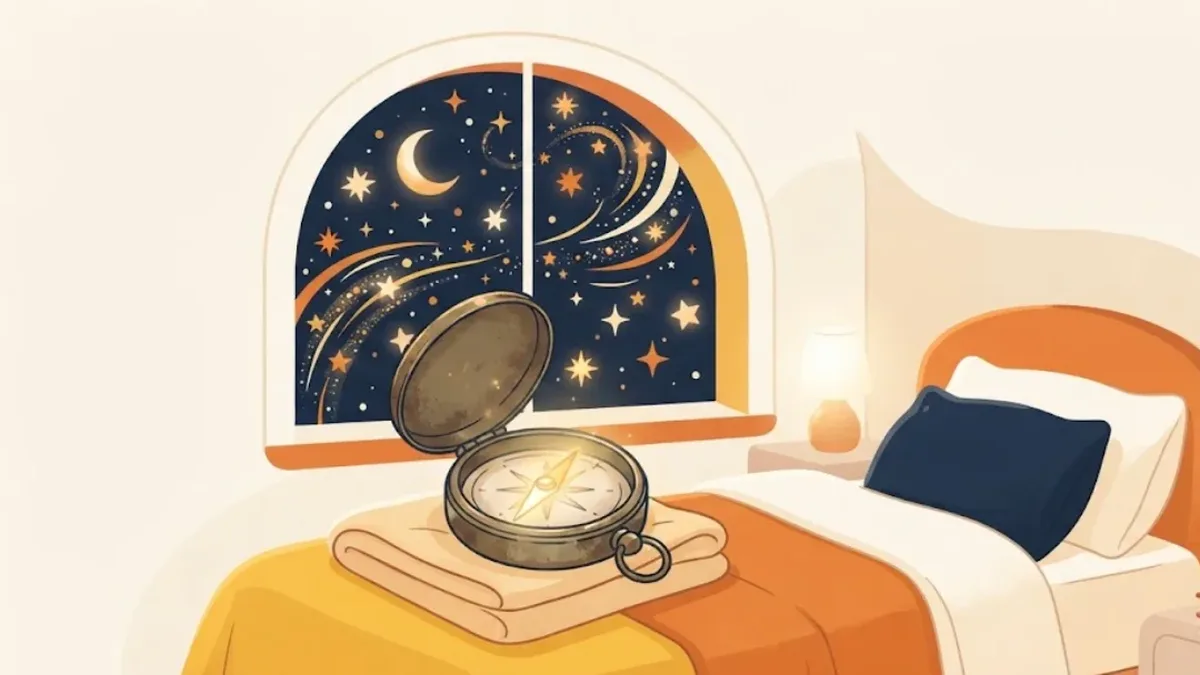
When Albert Einstein was about five years old and ill in bed, his father showed him a small compass. Albert was amazed. The needle always pointed the same way, but nothing seemed to touch it! He wanted to know why. That question was the start of a life full of big questions.
9. Isaac Newton caught criminals
Isaac Newton is famous for his ideas about gravity (the force that makes things fall to the ground). But later in life, he worked at the Royal Mint, the place that makes Britain’s coins. His job included catching counterfeiters: people who made fake money. Newton questioned many people and helped to send them to court.
10. Tu Youyou found a new medicine in a very old book
In the 1960s and 70s, the Chinese scientist Tu Youyou looked for a medicine to fight malaria, a serious illness spread by mosquitoes. She found an idea in a Chinese medical book about 1,600 years old. It helped her to find a medicine called artemisinin, which has saved millions of lives. In 2015 she won the Nobel Prize, the first Chinese woman to win one in science.
Useful words from this post
- radiation: invisible energy that some materials give off
- experiment: a test to find out if something is true
- coincidence: a surprising chance connection
- seasick: feeling ill because a boat is moving
- counterfeiter: a person who makes fake money
Try to use two of these words today. For example: “What a coincidence! We have the same birthday.”
What can we learn from these scientists?
These fun facts about famous scientists show us something important. Great scientists were curious. They asked “why?” like a five-year-old with a compass. They kept going when things were hard, like Darwin on his rocking ship. And they had hobbies and a sense of humour too.
Learning English is a bit like science: you try, you make mistakes, and you learn. Every new word is a small discovery!
Learn English with true science stories
Do you enjoy stories like these? Our free video lessons tell the true stories of famous scientists and other inspiring people in clear, simple English. Every lesson has subtitles, flashcards, a worksheet and a quiz. Start with a story you love, and let curiosity help you learn.