How to Practise English Speaking Alone at Home (7 Easy Ways)
No partner? No problem! Learn how to practice English speaking alone at home with 7 easy, fun ways: shadowing, talking to yourself, recording and more.
16 October 2026 · 5 min read
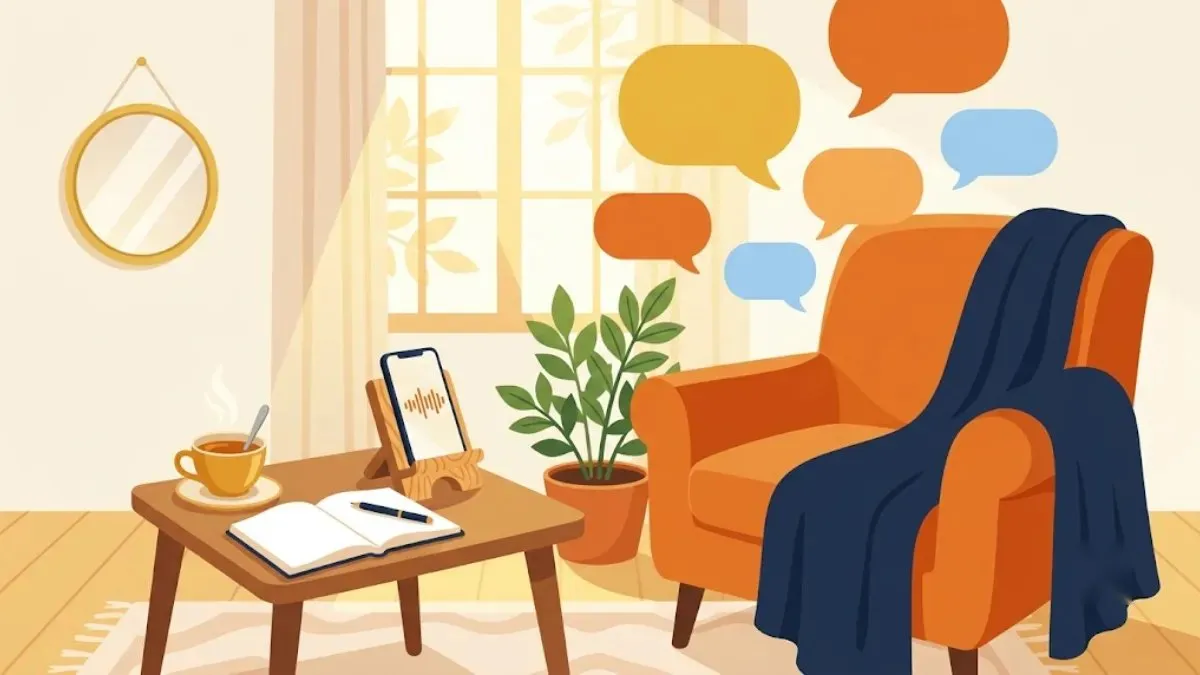
Do you want to speak English better, but you have nobody to talk to? You are not alone! Many learners feel this way. The good news is simple: you can learn how to practice English speaking alone at home. You don’t need a teacher, a partner or a lot of money. You only need your voice, a few minutes a day and a little courage.
Speaking is like riding a bike. Reading about bikes is useful, but you only learn when you get on and start to pedal. So today, let’s get your mouth moving with 7 easy ways to practise speaking on your own.
Why practising alone really works
When you speak alone, nobody is listening. That means no pressure and no fear of mistakes. You can repeat a sentence ten times, laugh at yourself and try again.
There is science behind it too. Researchers at the University of Waterloo in Canada found that people remember words better when they say them out loud than when they read them silently. So every time you speak, you are also helping your memory.
“I was shy in class, but at home I could practise again and again.”
How to practice English speaking alone at home: 7 easy ways
1. Talk to yourself (yes, really!)
This sounds funny, but it is one of the best habits you can build. Describe what you are doing while you do it.
“Now I’m making breakfast. I’m cutting some bread. The kettle is boiling.”
This is called self-talk. It helps you find everyday words fast. When you don’t know a word, write it down and look it up later.
2. Try shadowing
Shadowing means listening to a speaker and repeating their words straight away, like a shadow that follows you. Choose a short video, play one sentence, pause, and copy it. Try to match the speed, the stress and the music of the voice.
Short story videos are perfect for this. For example, play one minute of our lesson Terry Fox: The Marathon of Hope and shadow it sentence by sentence. Our post on how to learn English from videos has more ideas.
3. Record yourself and listen back
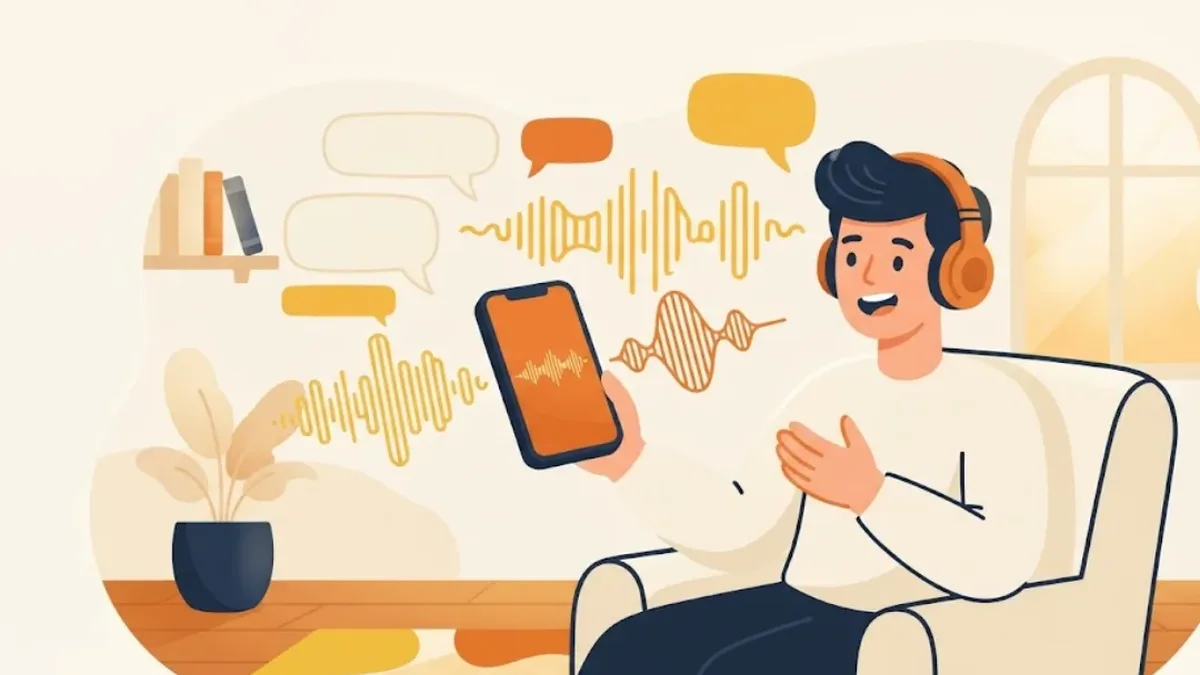
Use the voice recorder on your phone. Speak for one minute about a simple topic, then listen. It may feel strange at first. That’s normal! Listen for:
- words you paused on (pause = stopped for a moment)
- sounds that were difficult
- sentences that were clear and strong
Keep your recordings. After a month, listen to the first one. You will be surprised how much you have improved.
4. Read out loud for five minutes
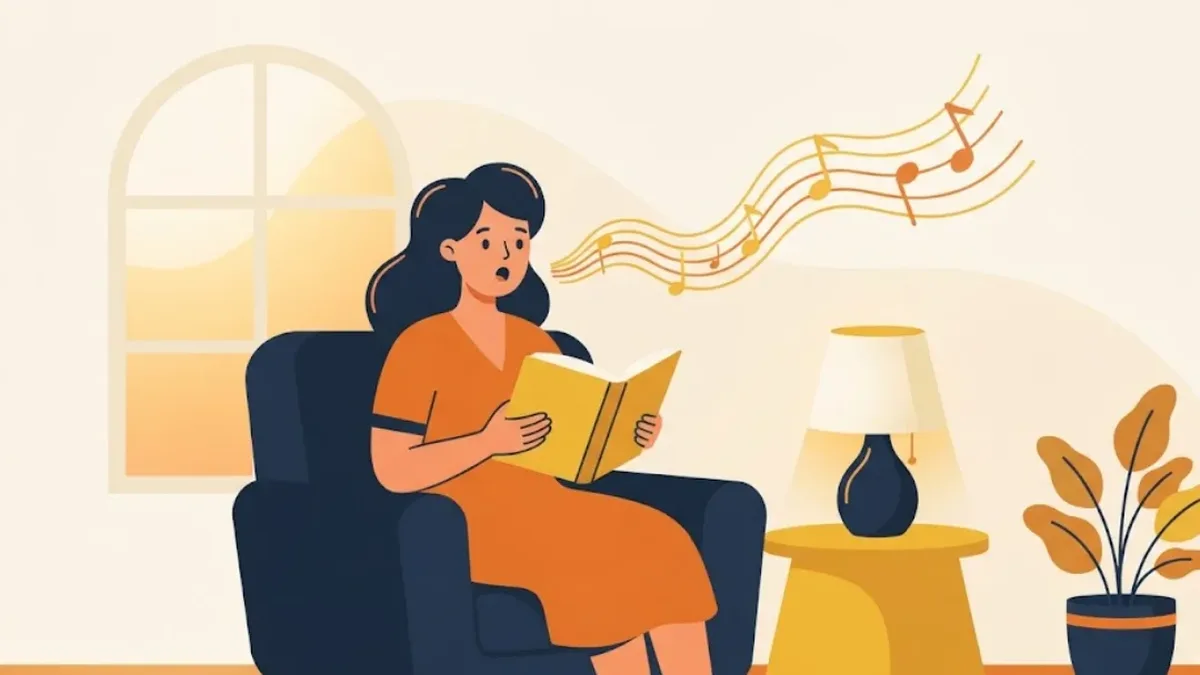
Pick a short text you like: a blog post, a story or the words under a lesson video. Read it slowly and clearly, out loud. Reading aloud trains your mouth to make English sounds, and you don’t have to think of the words yourself.
Tip: read the same text three days in a row. Each day it will feel smoother.
5. Answer questions as if someone is asking you
Write five easy questions on paper and answer each one out loud for 30 seconds.
“What did you do last weekend?” “What is your favourite food, and why?” “Tell me about your best friend.”
This is great practice for real conversations and for speaking exams. Try not to stop. If you make a mistake, just keep going!
6. Retell a story in your own words
Watch or read a short story, then close it and retell it (tell it again) in your own words. Start with “First…”, “Then…”, “After that…” and “In the end…”.
“First, Terry had an idea. Then he started running across Canada…”
Retelling helps you use new words from the story, and it builds longer sentences step by step.
7. Make speaking a tiny daily habit
Little and often is the secret. Five minutes every day is better than one hour once a week. Link speaking to something you already do:
- Talk to yourself while you brush your teeth.
- Shadow a video while you make coffee.
- Describe your day out loud before bed.
Our page on how to study has more tips for building a happy habit.
Common worries (and friendly answers)
“I feel silly talking to myself.” Everybody does at first! After a few days it feels normal, and nobody can hear you.
“How do I know if I’m making mistakes?” At the start, it doesn’t matter too much. Speaking often is more important than speaking perfectly. Listening to your recordings and copying good speakers will fix many mistakes by itself.
“Is it enough without a partner?” Practising alone builds your fluency (speaking smoothly) and your confidence. Then, when you meet a real person, you will be ready.
Start speaking today
You don’t have to wait for the perfect partner or the perfect class. You can start today, in your own home, with one sentence. Choose one idea from this list and try it for a week. That’s it!
Which way will you try first?
Want something great to shadow and retell? Our free video lessons tell real, inspiring stories in clear English for levels A1 to B2. Watch a free lesson now and start speaking with a smile!