Remember New Words for Good: A Simple Guide to Spaced Repetition
You learn a word today and forget it by Friday. Spaced repetition fixes that. Here is how it works and a simple schedule you can start today.
21 September 2026 · 4 min read
You meet a new word. You understand it, you write it down, and you feel sure you’ll remember it. Three days later, it’s gone.
This happens to everyone. Our brains are designed to forget information we don’t use. More than a hundred years ago, the German psychologist Hermann Ebbinghaus studied this and described what we now call the forgetting curve: we forget new information fast, especially in the first few days.
The secret: review just before you forget
Each time you remember a word at the right moment, your memory of it gets stronger, and it lasts longer before it fades again. So instead of studying a word ten times in one evening, study it a few times, spread out over days and weeks.
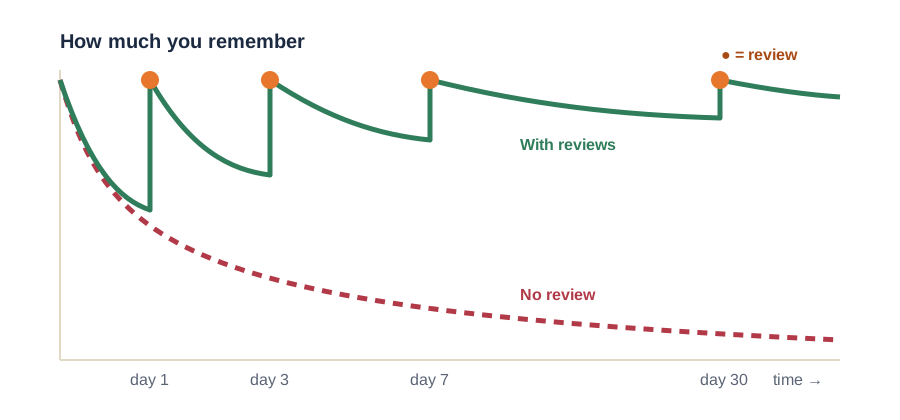
This picture shows the idea, not exact data.
A simple schedule
You don’t need a special app to start. Try this schedule for every new word:
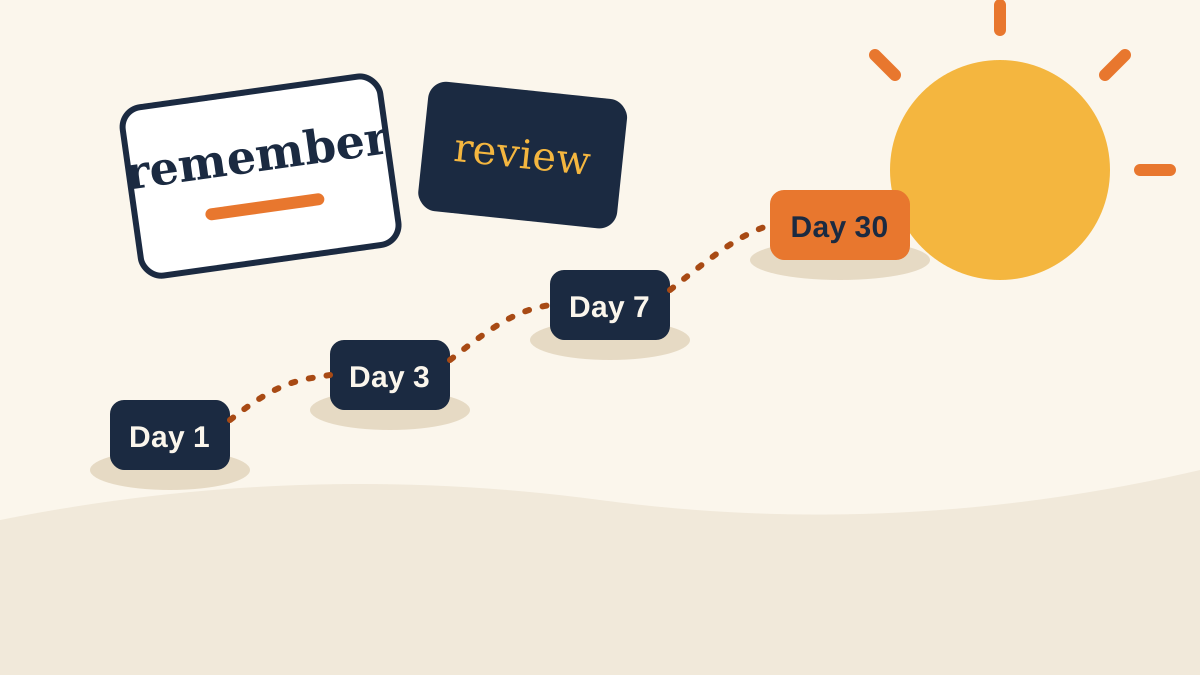
- Day 1: learn the word and its example sentence.
- Day 3: review it.
- Day 7: review it again.
- Day 14: one more time.
- Day 30: if you still know it, it’s yours.
If you forget a word, don’t worry. Just start its schedule again from day 1.
Make each review count
How you review matters as much as when.
- Test yourself, don’t just re-read. Look at the word and try to remember the meaning before you check. That small struggle is what builds memory.
- Say it out loud. Hearing and saying the word connects it to your ears and your mouth, not only your eyes.
- Make your own sentence. “Terry kept going” is good. “I kept going when my exam was hard” is even better, because it is about you.
- Keep sessions short. Ten minutes a day beats one hour on Sunday.
Using our flashcards
Every lesson has flashcards for the key words. Flip a card, then choose I know this or Still learning. Your choices are saved on your device, so when you come back, press Practise again to see only the words you’re still learning.
Start with the words from one story today, and review them on day 3. You’ll be surprised how much stays with you.