Build a 10-Minute English Reading Habit
Build an English reading habit in just 10 minutes a day. Easy, friendly steps to choose the right books, read every day and enjoy your progress.
21 October 2026 · 5 min read
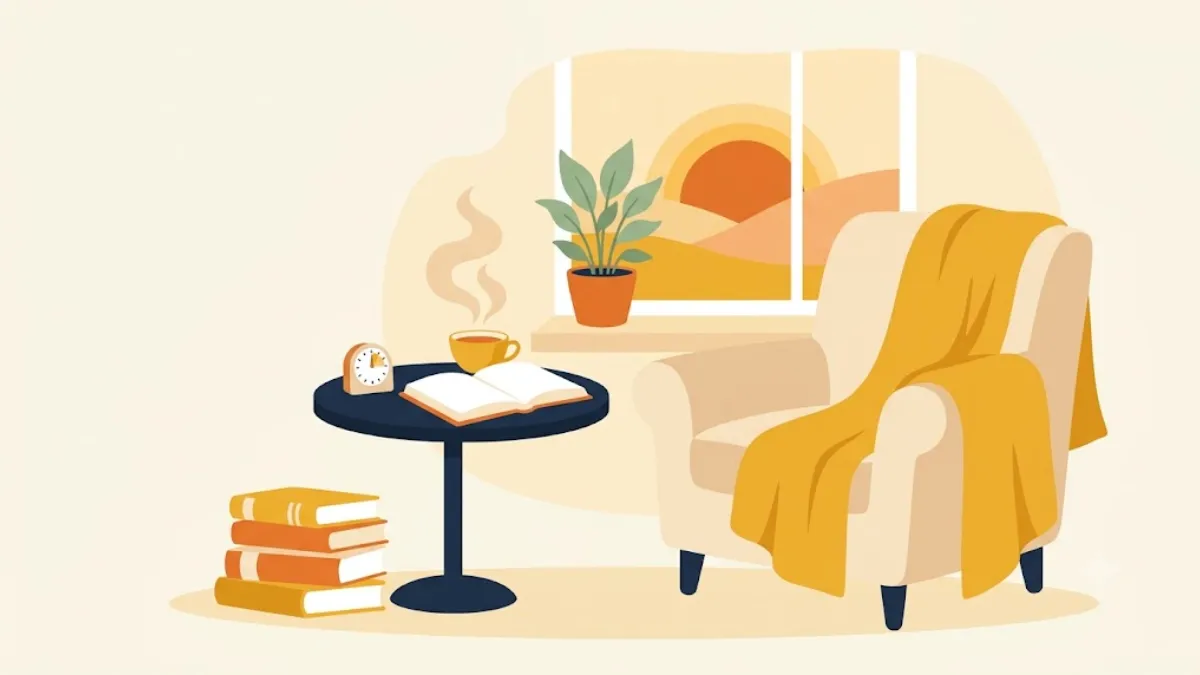
What if you could improve your English with a cup of tea and just ten minutes? You can! A small English reading habit is one of the easiest and most enjoyable ways to learn. You don’t need a classroom or a big plan. You need a good book, a quiet corner and a few minutes every day.
In this post you will learn why reading helps so much, how to choose the right things to read, and seven simple steps to make reading part of your day.
Why reading is so good for your English
When you read, you meet new words again and again, in real sentences. Slowly, your brain learns how English fits together: which words go together, how sentences start and end, and how people really say things.
Reading also helps your other skills:
- Vocabulary: you see new words in context (the words around them), so they are easier to understand and remember.
- Grammar: you notice grammar without studying rules.
- Writing: good writers are usually good readers.
- Confidence: finishing a story in English feels wonderful!
And ten minutes is more than it sounds. Ten minutes a day is over 60 hours of English in one year. That’s a lot of happy reading time.
Why 10 minutes is the perfect start
Many learners say, “I will read for one hour every evening.” It works for three days, and then life gets busy. A small goal is much easier to keep. Ten minutes is short enough for a tired day, but long enough to read a few pages.
“I can’t read for an hour today, but I can read for ten minutes.”
On a good day you can always read more. But ten minutes is your minimum: the small promise you keep every day.
7 easy steps to build your English reading habit
1. Choose something easy and fun
This is the most important step. If a page has too many new words, reading becomes hard work, and you will stop. A good rule: you should understand almost every word on the page. Graded readers are great for this. They are books written for your English level, from A1 to B2. Short news stories for learners, comics and children’s books are good too.
2. Read about things you love
Do you love football, cooking, travel or true stories about amazing people? Read about that! When you really want to know what happens next, ten minutes passes very quickly.
3. Pick the same time every day
Habits love routine. Connect your reading to something you already do every day: with your morning coffee, on the bus, or before you go to sleep.
“Every morning, after breakfast, I read two pages in English.”
4. Use a timer
Set a timer for ten minutes and just start. When it rings, you can stop and feel proud. Or, if the story is exciting, you can keep going. A timer makes it feel like a small, friendly game.

5. Don’t stop for every new word
Stopping to check every word breaks the story. Try to guess from the other words in the sentence. Only look up a word if it appears many times, or if you really can’t understand the sentence without it. Write a few of these words in a notebook. Our guide to remembering new words with spaced repetition shows how to keep them for good.
6. Read out loud sometimes
Reading out loud for a minute or two is great practice for your pronunciation and your speaking. It also helps you notice the rhythm of English. You can even listen to the audio of a story first and then read it yourself.
7. Track your progress
Make a simple reading calendar and put a tick on every day you read. After a week you will see a happy row of ticks, and you won’t want to break it! You can also write the title of every book you finish. Your list will grow faster than you think.

A true story about the power of reading
Reading can change a life. Frederick Douglass was born into slavery in the United States, and he was not allowed to learn to read. As a young boy, he was sent to work for a family in the city of Baltimore. There, Sophia Auld began to teach him the alphabet, until her husband stopped the lessons. But Frederick did not give up. He gave bread to poor white boys in the street, and in return they helped him with reading. When he was about twelve, he bought a book of famous speeches called The Columbian Orator and read it again and again.
He grew up to become a famous writer and speaker who fought against slavery. You can hear his full story, told in easy English, in our lesson Frederick Douglass: He Was Forbidden to Read… So He Taught Himself.
Your 10-minute reading plan for this week
Here is an easy plan to begin:
- Day 1: Choose one easy book or story.
- Days 2–6: Read for ten minutes at the same time each day.
- Day 7: Look back. How many pages did you read? Celebrate!
Remember, the best reading habit is the one you enjoy. Easy, fun and every day is much better than hard, boring and once a month. If you want more ideas, read our tips on how to stay motivated when learning English.

Read, listen and learn with true stories
Love true stories? Our free video lessons tell real, inspiring stories in clear, simple English for levels A1 to B2. You can listen, read along and learn useful new words in every lesson. Start watching Bright Lives English lessons today, and make your ten minutes the brightest part of the day!