6 Famous People Who Loved Reading as Children
Bread for lessons, a book worn thin and a library of three books! Meet 6 famous people who loved reading as children, in easy English with useful words.
1 November 2026 · 5 min read
What do a famous writer, a great scientist and a brave fighter for freedom have in common? They all started with a book in their hands. In this post you will meet 6 famous people who loved reading as children. Some of them were poor, some could not see, and one was not allowed to read at all. But they all found a way. Every story is true, and each one teaches you a useful new word or phrase.
Why reading as a child matters
When we read, we visit new places, meet new people and learn new words, all without leaving our chair. For many famous people, reading was the spark (the small start of something big) that changed their whole life. Let’s see how.
6 famous people who loved reading as children
1. Hans Christian Andersen: stories from his father
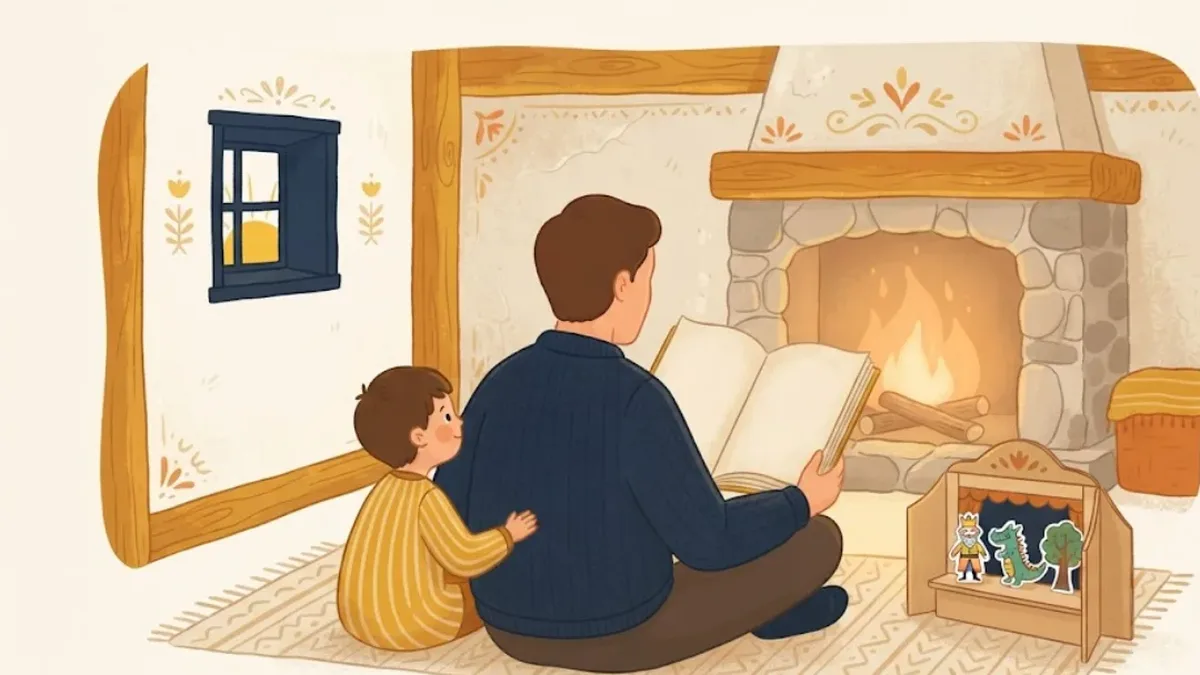
Hans Christian Andersen was born in 1805 in Odense, Denmark. His family was poor: his father was a shoemaker and his mother washed other people’s clothes. But his father loved stories. He read The Arabian Nights and funny plays to his little son, and he made him a toy theatre. Young Hans used it to act out plays, even plays by Shakespeare. Later, he wrote famous fairy tales like The Ugly Duckling and The Little Mermaid.
“His father read aloud to him in the evenings.”
2. Frederick Douglass: bread for reading lessons
Frederick Douglass was born into slavery in the USA around 1818. When he was a boy, a woman in the house started to teach him the alphabet, but her husband stopped her. He said it was wrong for an enslaved child to learn to read. So Frederick found another way. He gave bread to poor boys in the street, and in return (as an exchange) they helped him with his reading. At about 12 years old, he used money from shining shoes to buy a book called The Columbian Orator. He read it again and again. Hear his full story in our free lesson Frederick Douglass: He Was Forbidden to Read… So He Taught Himself.
“He found another way to learn.”
3. Louis Braille: a library of only three books
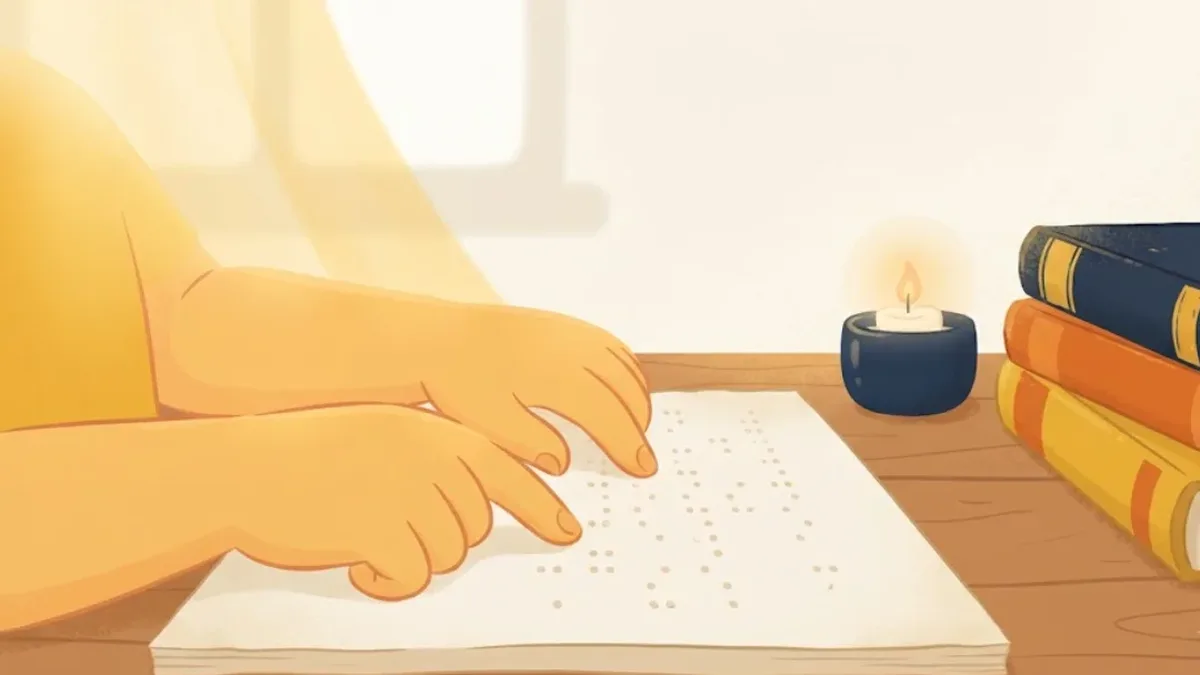
Louis Braille became blind after an accident when he was three years old. At ten, he went to a special school for blind children in Paris. He was eager (very excited and ready) to read, but the school library had only three books! The letters were big and raised, so they were very slow to read. Louis wanted more. So he made his own system of small raised dots, and he showed it to others when he was only 15. Today, millions of blind people read in braille.
4. Helen Keller: a book she almost knew by heart
Helen Keller could not see or hear from the age of 19 months. With her teacher, Anne Sullivan, she learned words with her fingers, and then she learned to read raised letters. She loved her few books so much that she read them until the pages were worn thin. At about eight, she read the story Little Lord Fauntleroy and loved it so much that she almost learned it by heart (could say it from memory). She later wrote that books were a world where nothing could shut her out.
“She read it so often that she almost knew it by heart.”
5. Albert Einstein: a friend who brought books
When Albert Einstein was about ten, a young medical student called Max Talmud began to have lunch with his family once a week. Max brought books for the curious boy: popular science books about stars, light and the natural world, and later a geometry book (the maths of shapes and lines). Albert read them all with great excitement. He loved the geometry book so much that he later called it his “holy geometry booklet”.
“He read every book with great excitement.”
6. Anne Frank: books in a secret hiding place
Anne Frank got a diary for her 13th birthday in June 1942. A few weeks later, her family went into hiding from the Nazis in a secret part of a building in Amsterdam. For two years they could not go outside. Reading helped them pass the time (make the long hours go by). Brave helpers brought books from a library and from their own homes, and Anne also read magazines about film stars. She copied her favourite lines from books into a special notebook. Discover her story in Anne Frank: She Hid Behind a Bookcase for Two Years… Then Her Diary Reached the World.

Useful words from this post
| Word or phrase | Meaning |
|---|---|
| spark | the small start of something big |
| in return | as an exchange for something |
| eager | very excited and ready to do something |
| by heart | from memory |
| pass the time | make the hours go by |
| read aloud | read so other people can hear |
What can we learn from these readers?
These famous people who loved reading as children did not have easy lives. Many had very few books. But they were curious, and they kept reading. You can do the same with English. You don’t need a big library: one short story a day is a great start. Try our tips in Build a 10-Minute English Reading Habit.
Read and listen to true stories in English
Our free video lessons tell real, inspiring stories like these in clear, simple English for levels A1 to B2, with a transcript to read along as you listen. Choose a Bright Lives English lesson today and start your own reading adventure!