8 Fun Facts About Famous Inventors and Their Ideas
A melted chocolate bar, a dog walk and a wet winter day! Enjoy 8 fun facts about famous inventors in easy English, with useful new words to learn.
26 October 2026 · 6 min read
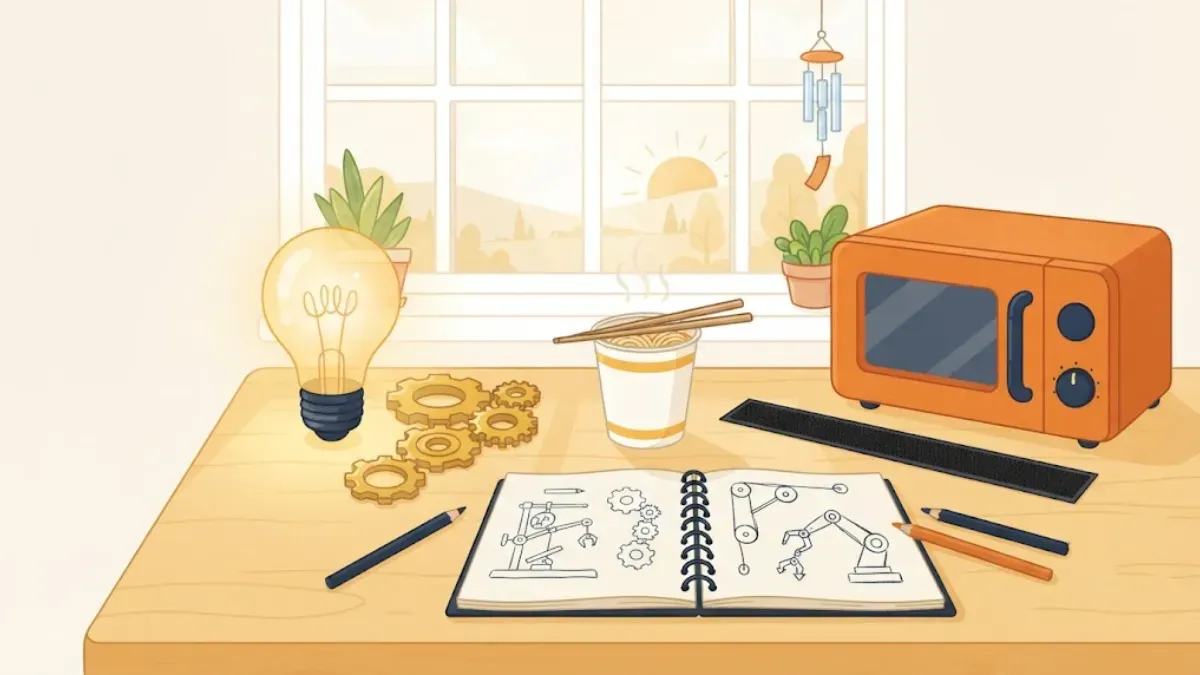
Where do great ideas come from? Sometimes from a laboratory, but very often from everyday life: a walk in the mountains, a broken plate or a cold, rainy day. In this post you will find 8 fun facts about famous inventors, told in simple English. Every story is true, and each one teaches you a useful new word or phrase.
8 fun facts about famous inventors
1. A melted chocolate bar gave us the microwave oven
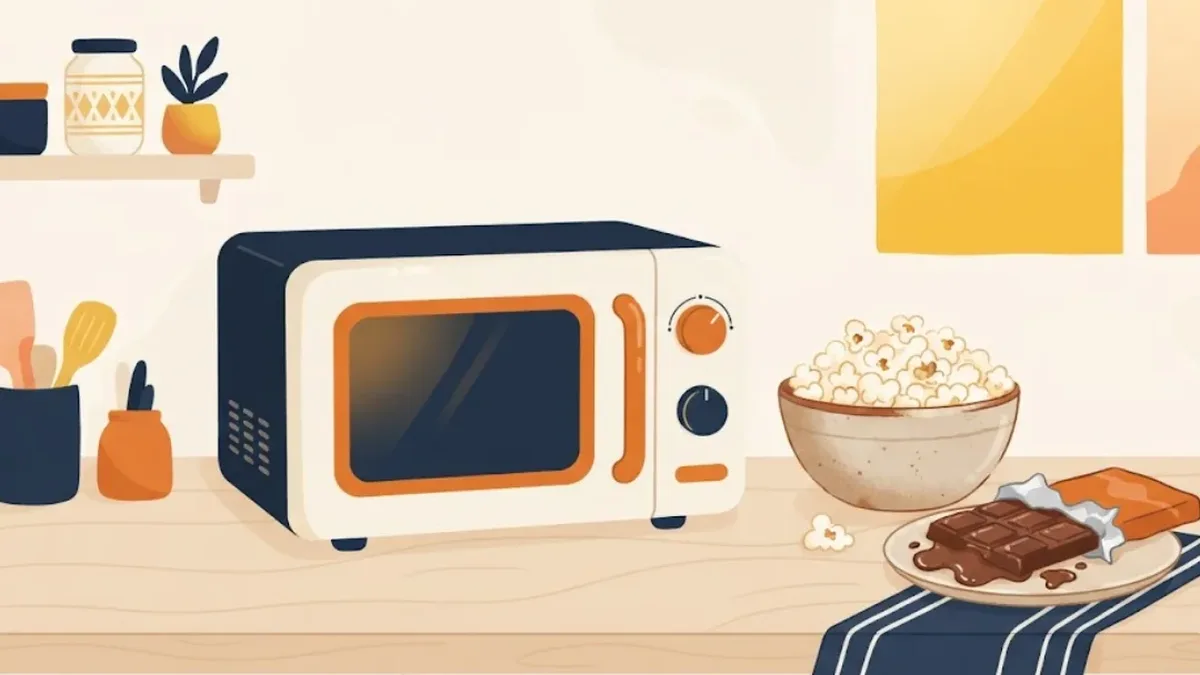
In 1945, an American engineer called Percy Spencer was working with a magnetron, a machine that makes radio waves for radar. One day he noticed that the chocolate bar in his pocket had melted (turned soft and liquid because of heat). He put some popcorn near the machine, and it started to pop! That was the beginning of the microwave oven. Amazingly, Spencer left school when he was still a child and taught himself most of what he knew.
“The chocolate in his pocket melted.”
2. The first microwave ovens were taller than a person
The first microwave ovens did not sit on a kitchen counter. They were about 1.7 metres tall and weighed around 340 kilograms, as much as five adults! Smaller, cheaper microwaves for homes came much later, in 1967.
3. Velcro was inspired by a walk with a dog
In 1941, the Swiss engineer George de Mestral went for a walk in the Jura mountains with his dog. When they came home, both his trousers and the dog’s fur were covered in burrs (small seed balls from plants that stick to things). He looked at them under a microscope and saw hundreds of tiny hooks. Years later, he copied this idea to make Velcro. The name comes from two French words: velours (velvet) and crochet (hook).
“He looked at the burrs under a microscope.”
4. A wet winter day led to the windscreen wiper
Around the start of the 1900s, Mary Anderson from Alabama, USA, visited New York on a cold, wet winter day. She saw that the driver of her streetcar had to open the window again and again to clean the snow and rain off the glass. So she invented a windscreen wiper that the driver could move with a lever from inside. She received a patent (an official paper that says an invention is yours) in 1903. Sadly, no company wanted to buy it at the time.

5. Broken plates gave us the dishwasher
Josephine Cochrane from Illinois, USA, loved to have dinner parties. But after one party, some of her precious old plates were chipped (a small piece was broken off) during washing. She decided to build a machine that could wash dishes safely. She received a patent in 1886, and her dishwasher won a prize at the big World’s Fair in Chicago in 1893.
“She decided to build a machine herself.”
6. A secretary made the first correction fluid in her kitchen
In the 1950s, Bette Nesmith Graham was a secretary in Texas. When she made a typing mistake, she painted over it with white paint and a small brush. Other secretaries wanted some too! She mixed it in her kitchen and sold it in small bottles, first as “Mistake Out” and later as Liquid Paper. In 1979 she sold her company for more than 47 million dollars. Fun extra fact: her son, Michael Nesmith, was in the famous pop band The Monkees.
7. Instant noodles were invented in a small shed
In 1958, when he was 48 years old, Momofuku Ando made the world’s first instant noodles in a small shed in Japan. He tried again and again, and nothing worked. Then he watched his wife cooking in the kitchen and had an idea: fry the noodles! Later, in 1971, he invented Cup Noodles. Hear his full story in our free lesson Momofuku Ando: He Was 48 and Had Almost Nothing… Then Invented Instant Noodles.
“He tried again and again.”
8. Louis Braille was only 15 when he finished his reading system
Louis Braille became blind after an accident when he was three years old. At school in Paris, he learned about a system of raised dots for reading in the dark, which used 12 dots. It was too difficult, so Louis made a simpler system with just six dots. He was only 15 years old! Today people all over the world read braille. Watch his story in Louis Braille: Letters You Can Feel.

Bonus: a film star who was also an inventor
Hedy Lamarr was a famous Hollywood actress in the 1940s. But at night, she was an inventor! In 1942, she and the composer George Antheil received a patent for a clever radio idea called frequency hopping. Their system used 88 frequencies, the same number as the keys on a piano. Ideas like theirs later helped to make Wi-Fi and mobile phones possible.
Useful words from this post
| Word | Meaning |
|---|---|
| invent | to make something new for the first time |
| inventor | a person who invents things |
| patent | an official paper that says an invention is yours |
| melt | to become liquid because of heat |
| chipped | with a small piece broken off |
| inspired by | got the idea from |
What can we learn from inventors?
These fun facts about famous inventors show us something important: you don’t need to be a genius to have a great idea. You need to be curious (to want to know more), to look closely at the world, and to keep trying. That is good advice for learning English too! If you enjoyed these stories, you might also like 10 Surprising Fun Facts About Famous Scientists.
Learn English with more true stories
Our free video lessons tell real, inspiring stories in clear, simple English for levels A1 to B2, with a transcript to read along. Choose a Bright Lives English lesson today and discover another bright idea!