Marie Curie: 9 Fun Facts About a Brilliant Scientist
A secret school, a blue wedding dress and two Nobel Prizes! Enjoy 9 fun Marie Curie facts in easy English, with useful new words for learners.
23 October 2026 · 5 min read
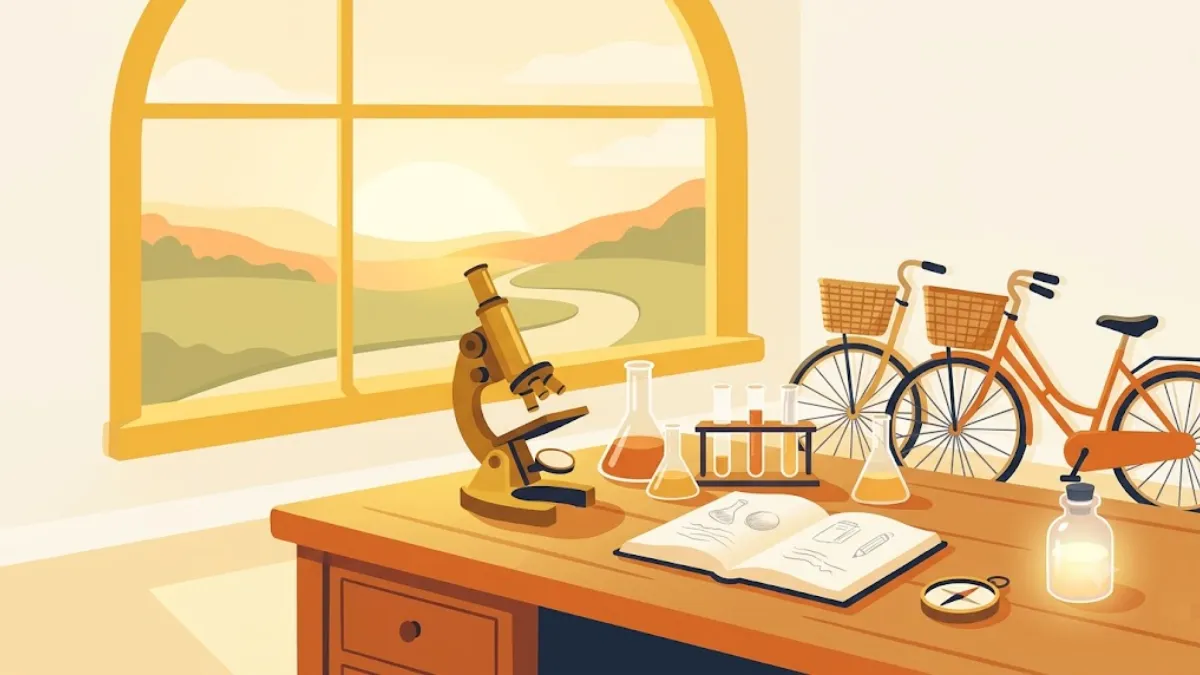
You probably know that Marie Curie was a great scientist. But did you know she went to a secret school, wore a blue wedding dress to work, and learned to drive during a war? In this post you will find 9 fun Marie Curie facts, told in simple English. Each fact also has a useful word or phrase for you to learn.
9 fun Marie Curie facts
1. She was the youngest of five children
Marie Curie was born Maria Skłodowska on 7 November 1867 in Warsaw, Poland. She was the youngest of five children. Her parents were both teachers, and Maria loved books and learning from a very young age.
“She was the youngest child in her family.”
2. She studied at a secret school
At that time, women in Poland could not go to university. So Maria and her sister studied at the Flying University, a secret school that moved from place to place to hide from the authorities. It was illegal (against the law), but they wanted to learn!
“They studied in secret because women couldn’t go to university.”
3. She made a deal with her sister
Maria and her older sister Bronisława both dreamed of studying in Paris, but they didn’t have enough money. So they made a deal: first Maria would work and help her sister, and later her sister would help her. Maria worked for several years as a governess (a teacher who lives with a family and teaches their children). In 1891, at the age of 23, she finally moved to Paris.
“They made a deal to help each other.”
4. She came top of her class
In Paris, Maria studied at the Sorbonne University and used the French name Marie. Her French was not perfect at first, and she was often cold and hungry in her small room. But she worked very hard. In 1893 she finished her physics degree top of her class, and the next year she got a second degree in mathematics.
“She came top of her class in physics.”
This is a great message for English learners: you don’t need to be perfect at the start. Keep going, step by step!
5. Her wedding dress was dark blue
In 1895 Marie married the French scientist Pierre Curie. She didn’t want an expensive white dress. Instead she chose a simple dark blue dress that she could wear in the laboratory for years. For their honeymoon, the couple went on a bicycle trip around the French countryside.
“She wore her wedding dress to work in the lab.”
6. She named a new element after Poland
In 1898 Marie and Pierre discovered two new elements (the simple materials that everything is made of, like gold or iron). Marie named the first one polonium, after her home country, Poland. The second was radium. Marie also helped make the word “radioactivity” popular.
“She named the element after her country.”
7. She was the first woman to win a Nobel Prize
In 1903 Marie, Pierre and the scientist Henri Becquerel shared the Nobel Prize in Physics. Marie was the first woman ever to win a Nobel Prize. In 1911 she won a second Nobel Prize, this time in Chemistry. She was the first person to win two Nobel Prizes, and she is still the only person to win them in two different sciences.
“She won not one, but two Nobel Prizes!”
Hear more of her story in our free A2 video lesson Marie Curie: The Secret School and Two Nobel Prizes.
8. She learned to drive to help soldiers
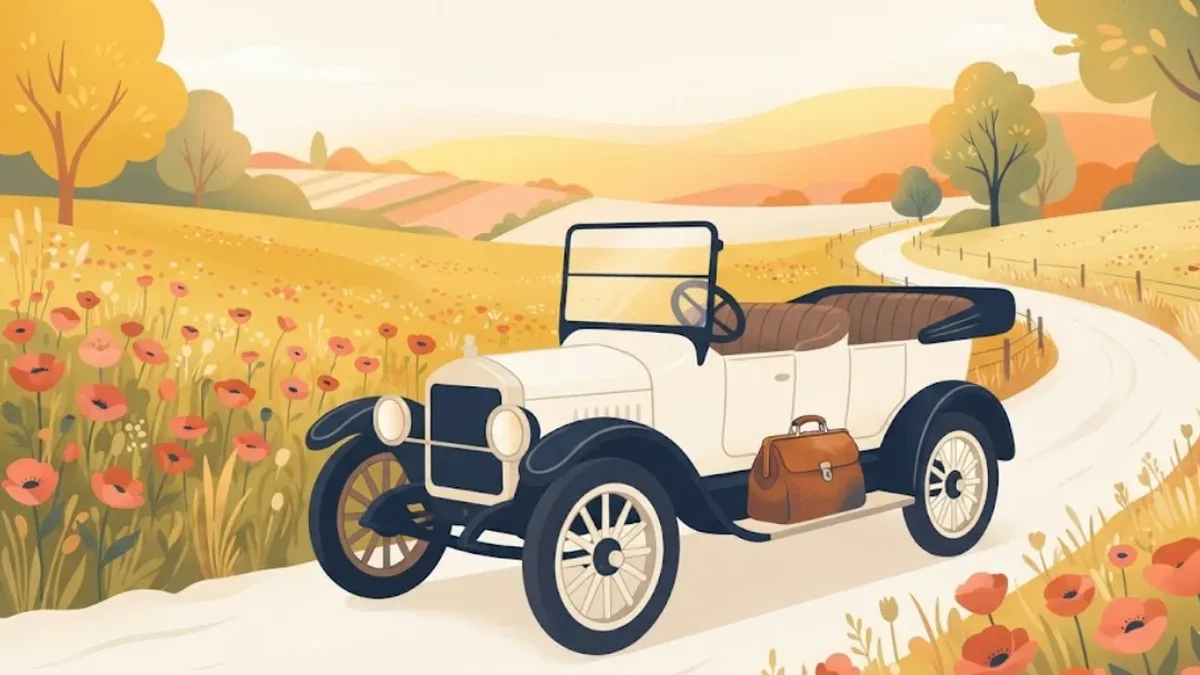
When the First World War started in 1914, Marie wanted to help. Doctors needed X-rays to find bullets and broken bones inside injured soldiers. So Marie put X-ray machines into cars and vans. The soldiers called them “petites Curies” (“little Curies”). Marie even learned to drive and to fix cars so she could take them to the front herself. Her 17-year-old daughter, Irène, worked beside her.
“She learned to drive so she could help the soldiers.”
9. Her family won more Nobel Prizes
The Curie story didn’t stop with Marie. In 1935 her daughter Irène Joliot-Curie and Irène’s husband, Frédéric, won the Nobel Prize in Chemistry too. Later, a new element, curium, was named after Marie and Pierre. And in 1995 Marie became the first woman to be buried in the Panthéon in Paris for her own achievements.
“Science ran in the family.” (= many people in the family loved science)
What can English learners learn from Marie Curie?
These Marie Curie facts show us something important. Marie was determined (she didn’t stop when things were hard). She learned a new language, studied in a cold little room, and kept working for years. Learning English can feel slow sometimes too, but small steps every day really add up.
Quick vocabulary review
- youngest: the person in a family who was born last
- in secret: when other people don’t know about it
- make a deal: agree to do something for each other
- come top of the class: get the best results
- discover: find something for the first time
- determined: not giving up, even when it is hard
Can you make your own sentence with one of these words? Try it now, out loud!
If you enjoyed these facts, you will also love our post 10 Surprising Fun Facts About Famous Scientists. It has another amazing fact about Marie’s notebooks!
Learn English with real stories
At Bright Lives English, you learn English through true stories of inspiring people like Marie Curie. Every short video teaches you five useful words, with clear speaking and a full transcript. Choose your level and start today with our free video lessons. Which famous person would you like to learn about next?